Ayuda.LA Blog
Articles, guides and insights on network infrastructure, cybersecurity and technology.

BGP communities: the traffic engineering tool most Latin American ISPs don't use well
BGP communities are one of the most powerful mechanisms for traffic engineering without touching the physical topology. Most ISPs in Latin America have them partially configured or poorly documente...

Your service, under control: what our clients can do from the support portal
When you hire support from Ayuda.LA, you get access to a dedicated management portal where you can track every ticket, monitor your contract hours, sign documents, submit improvement requests, and ...

From proof of concept to production: how to build a network automation agent that does not fail
The lab works perfectly. The automation agent runs changes without errors; playbooks finish in seconds. But in production, it fails. This guide explains why network automation PoCs do not scale, an...

Time to leave spanning tree: MPLS and VXLAN overlay networks for small ISPs
VLANs and Spanning Tree Protocol were the right answer for campus networks 20 years ago. For a small ISP in 2026, they are technical debt that limits scale, complicates operations, and creates avoi...
NetBox as source of truth: the control center your ISP network needs
NetBox is today the de facto standard to document, model, and automate network infrastructure. This guide covers everything it can do for an ISP or enterprise: IPAM, DCIM, circuit management, autom...

AI in networks: why 'hallucinations' are rational assumptions (and how to protect your operations)
AI models do not 'hallucinate' in the sense of random confusion. They make rational assumptions based on how they were trained: guessing is rewarded, being wrong is not punished. That distinction c...

Managing 600 devices with a small team: standardization lessons for ISPs
A team of four engineers runs a network of 620 devices across three provinces. They do not hire more people — they standardized everything. This is the methodology that makes operating at that scal...
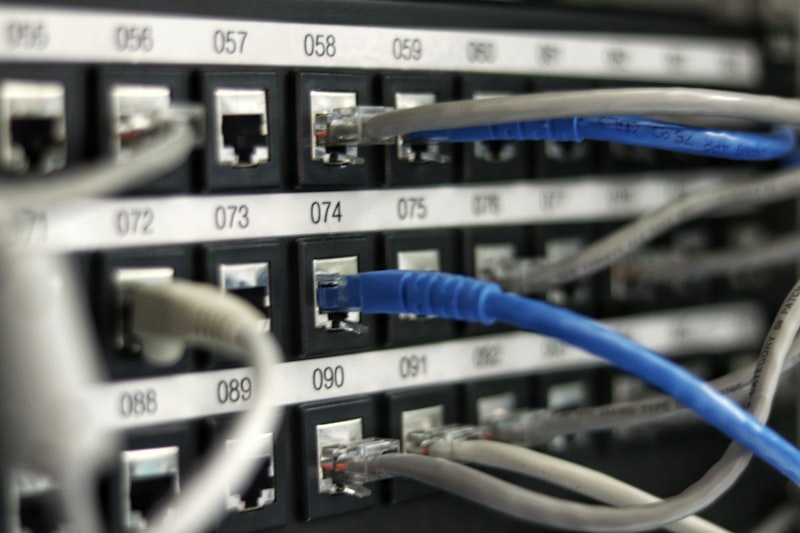
EVPN over IPv6: how to prepare the underlay of the future in your ISP network
A native IPv6 underlay for EVPN/VXLAN is today the logical next step for ISP networks that already migrated the data plane to IPv6. But interoperability issues between vendors are real. This guide ...

Automation in high-risk environments: when the margin for error is almost zero
Automation philosophies that work in low-risk settings break when the context is a production ISP network with thousands of users. Adapting them to high-risk environments requires deep mindset shif...

MC-LAG on Huawei routers: high availability at the access layer for ISPs
MC-LAG builds active-active redundancy without spanning tree at the access layer, removing one of the most frequent failure points in ISP networks. This guide covers the conceptual model and config...

IPv6 for ISPs in Latin America: why there is no excuse left to wait
LACNIC exhausted available IPv4 space for new assignments years ago. ISPs that keep postponing IPv6 are running infrastructure that grows in complexity and cost every year. This guide covers real t...

Botnets on the subscriber network: when DDoS comes from inside
The DDoS threat ISPs usually prepare for comes from outside. But a growing class of attacks originates inside the subscriber network itself: compromised devices in customer homes acting as bots. A ...

Proxmox vs VMware: a practical guide for ISPs evaluating a virtualization migration
Broadcom/VMware licensing changes forced a conversation many Latin American ISPs had been postponing. This guide compares Proxmox VE and VMware vSphere from a network operator’s perspective, with a...

BGP for ISPs: the 7 most costly configuration mistakes (and how to avoid them)
BGP is the protocol whose misconfiguration can cause an ISP’s most expensive incidents. These are the seven mistakes we see most often in Latin American networks, and concrete measures to avoid them.
Network automation for ISPs: how to stop firefighting and start preventing fires
Network automation is not a one-month project. It is the difference between firefighting and fire prevention. This practical guide shows where to start in a real ISP, with Ansible, Python, and NAPALM.

RPKI vs social engineering: How to protect your BGP when the human firewall fails
A Latin American ISP suffered BGP route hijacking in 2025 despite having RPKI in place. The vector: its own onboarding process. How to close the gap between technical validation and the human process.

Proxmox Datacenter Manager 1.0: The console that unifies your virtualized infrastructure
Proxmox Datacenter Manager 1.0 reached stable release: centralized management of multiple VE clusters, live migration across sites, granular RBAC, and EVPN SDN—all from one interface, no per-socket...

Boring network design is successful network design: lessons from NANOG 96
At NANOG 96, Ryan Hamel of Zayo Group argued a thesis every seasoned operator will recognize: the most successful network is the most boring one. Why operational simplicity is not lack of ambition,...

Programmable DDoS mitigation: Cloudflare Programmable Flow Protection for proprietary UDP protocols
Cloudflare launches Programmable Flow Protection in beta: eBPF programs the operator deploys on Cloudflare’s global network to mitigate DDoS against proprietary UDP protocols. A game changer for IS...

Cascade AI against skimming: Cloudflare Client-Side Security now available to everyone
Cloudflare opens its Client-Side Security platform to the general public with two-stage AI detection: a GNN for high recall and an LLM as a precision filter. Result: 200x fewer false positives. It ...

Mandatory DNS Blocking: What ISPs and Regulators in Latam Need to Understand
DNS blocking looks like a simple fix to regulators. But it carries technical consequences that ISPs in Latam must understand before implementing it: from collateral blocking to interference with DN...

The shallow-buffer switch trap
When choosing switches, we see the small ISP market leaning toward certain models that look like a BBB solution (good, nice, and cheap). Here we analyze whether that really holds up...

When Knowledge Lives in One Person's Head (and Why It's a Risk)
Discover why dependence on technical 'heroes' is a silent threat to your organization and how to transform tribal knowledge into systemic resilience before it's too late.
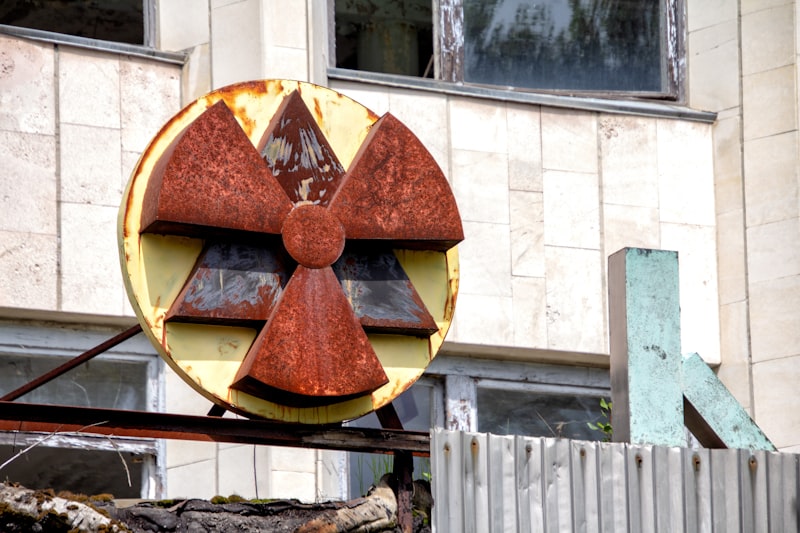
The Day the Core Goes Down: What Every ISP Should Have Ready
At some point it will happen. It doesn't matter the size of the ISP, the brand of equipment, or how many years the network has been running: **the core is going to go down**. The difference between...

5 Cybersecurity Mistakes SMBs Make (and How to Avoid Them)
SMBs are not a secondary target: they're the preferred target. These are the most common mistakes we see in practice and how to fix them before it's too late.

When Solving the 'Impossible' Is Part of the Job
In many organizations, the word *impossible* appears more often than it should. 'It can't be done', 'nobody knows how it works', 'it's always been like this', 'better not touch it'. At Ayuda.LA, **...

We Don't Sell Hardware: We Guarantee Operational Peace of Mind
At Ayuda.LA we have a mantra: **we don't sell hardware; we sell operational peace of mind**. And it's not a marketing phrase: it's a way of working.